|
|

|
|
|
|
|
|
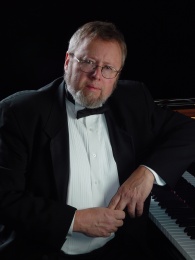
Ludwig Korelli Buones Aires 1942
Ludwig Korelli
|
|
Baroque music
Six Preludes and Fugues Op. 103 (1973-74) By © Charles A. Gazzari. All right reserved.
•
Fugues: By © Charles A. Gazzari. All right reserved.
» MIDI | Fuga for organ Op. 45, Oasis By © Charles A. Gazzari. All right reserved.
» MIDI | Giga-Fuga for organ Op. 100, Inexhaustible By © Charles A. Gazzari. All right reserved.
» MIDI | Baroque Sonata for oboe and strings, ~ 1st mov't (from Op. 61) By © Charles A. Gazzari. All right reserved.
Ludwig Korelli is the nóme de guerre of Charles A. Gazzari. Birth on Buenos Aires (1942) from a family of Italian immigrants he took 5 years of piano lessons under Alma Melgar and 8 years under Vincenzo Scaramuzza, even if efforts to become a concert pianist never panned out for various reasons. Deeply intrigued about the music of J.S. Bach since earlier years Mr. Korelli began to improvise counterpoint at age 8 or 9 and write some polyphony at 14. In '65 he came into the US: in California he did much composing between the years 1969 and 1980. At that point all musical efforts were abandoned and much disenchantment set in at his inability to bring producers, performers or conductors to view the possibilities of New-Baroque composition.
Ludwig Korelli
Resumed composing in 2001 and recorded some CDs under the banner Cloud Nine Music and Well-Tempered Gramophone, none of his records or CDs were sold. By early 2004 he and his wife Barbara moved into a modest home near the beach at Ocean Shores, Washington State, which they call, sentimentally, Paradiso. Now semiretired on a Social Security pension, his composition of New or Pseudo-Baroque counterpoint continues, and the compilation of some 100 fugal or otherwise contrapunctal opuses, including several concerti, is following due course. |
|
|
|||||
|
.mid files: 20,000+
(1,000+ composers,
400+ pages)
Last updating: 06-01-2024 10.14 | List of Contributors | Make a Donation |


 Top of page